
Designing a Sleek Black and White Kitchen
A black and white kitchen is the epitome of timeless style. Its clean lines, bold contrasts, and versatile palette make it a favorite choice for homeowners looking to create a space that feels both modern and classic. While some may think black and white is too stark or minimalist, when done correctly, it can be warm, inviting, and full of personality. With careful planning, attention to materials, and a thoughtful balance of color and texture, a black and white kitchen can become the centerpiece of your home.
Working with professionals, particularly local kitchen designers, can help transform your vision into a functional and stylish reality. They bring experience in layout, lighting, and material selection, ensuring that the space not only looks stunning but also functions efficiently. From choosing cabinetry to selecting the perfect backsplash, expert guidance can help you avoid design pitfalls and make choices that stand the test of time.
Choosing the Right Balance of Black and White
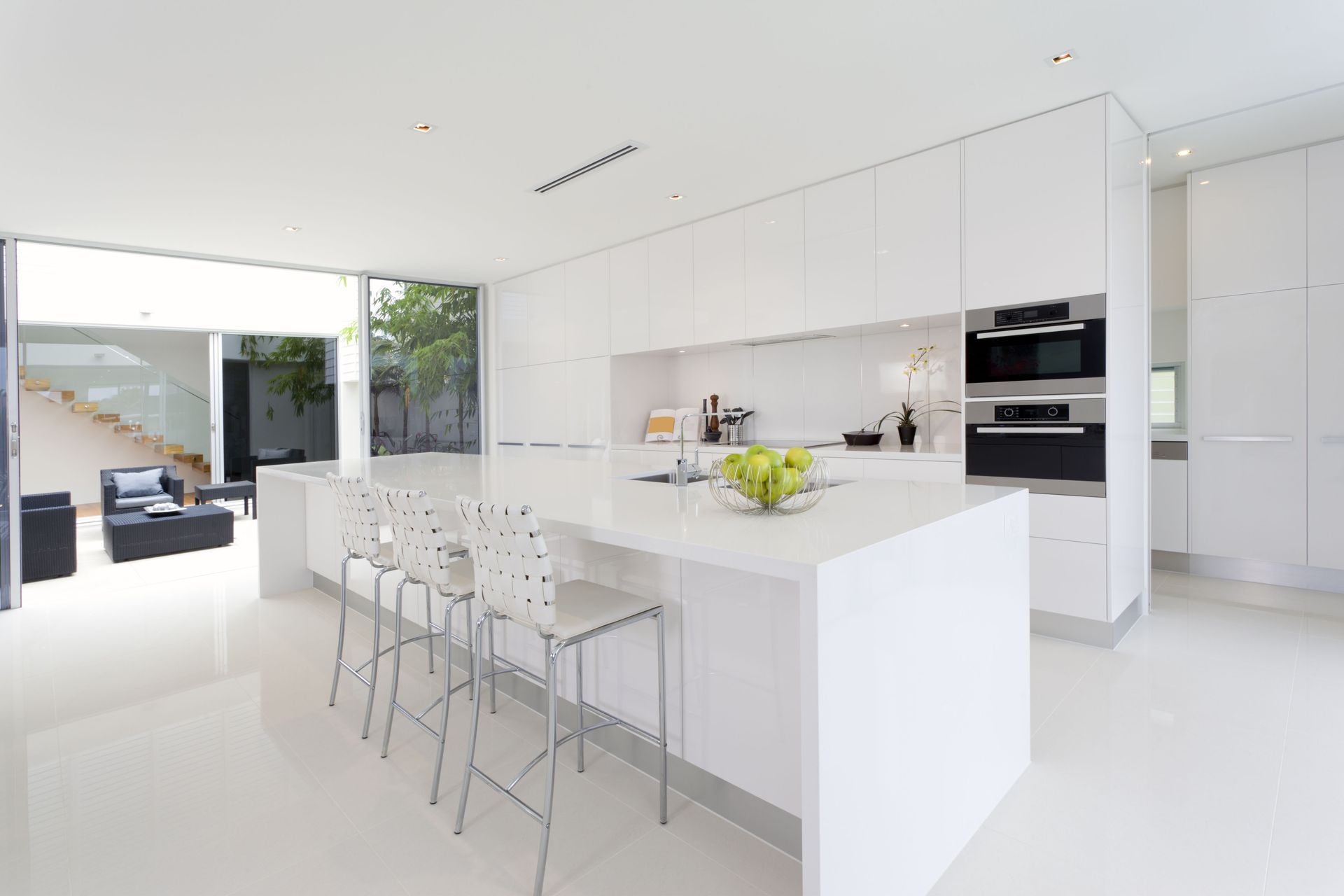
One of the most important aspects of designing a black and white kitchen is achieving the right balance between the two colors. Too much black can make the space feel dark and closed in, while too much white can feel sterile or cold. Consider using black for accent elements such as cabinets, islands, or hardware, while keeping walls, countertops, and larger surfaces in white to maintain brightness and openness.
Local kitchen designers often recommend incorporating mid-tones or subtle textures to soften the contrast. For example, a white marble countertop with gray veining or a matte black backsplash with a subtle pattern can break up the monotony while keeping the palette cohesive. Lighting also plays a key role, strategically placed under-cabinet lighting, pendant lights over the island, or recessed ceiling lights can illuminate dark areas and enhance the overall atmosphere. Proper balance ensures that the kitchen feels elegant, cohesive, and comfortable for both cooking and entertaining.
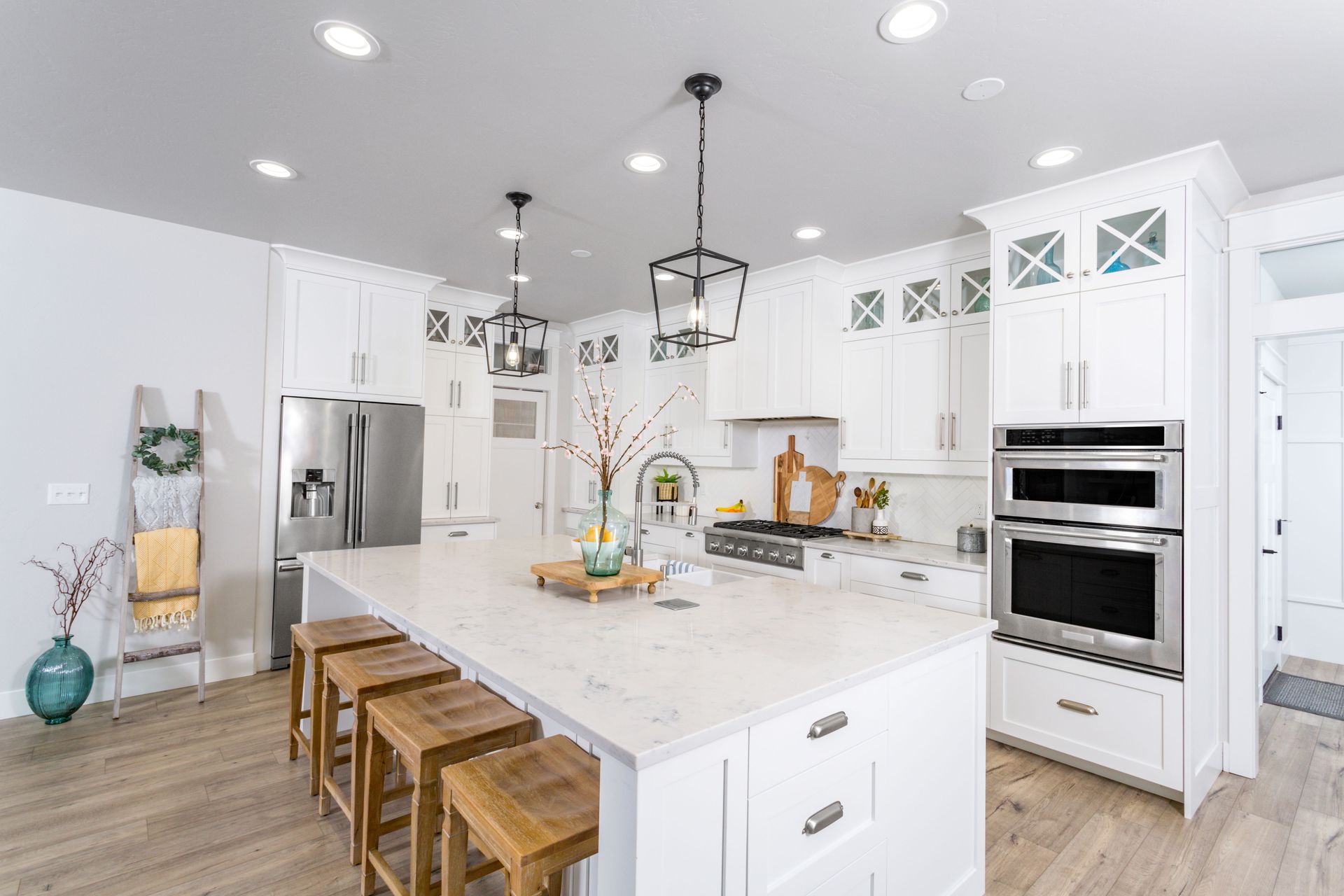
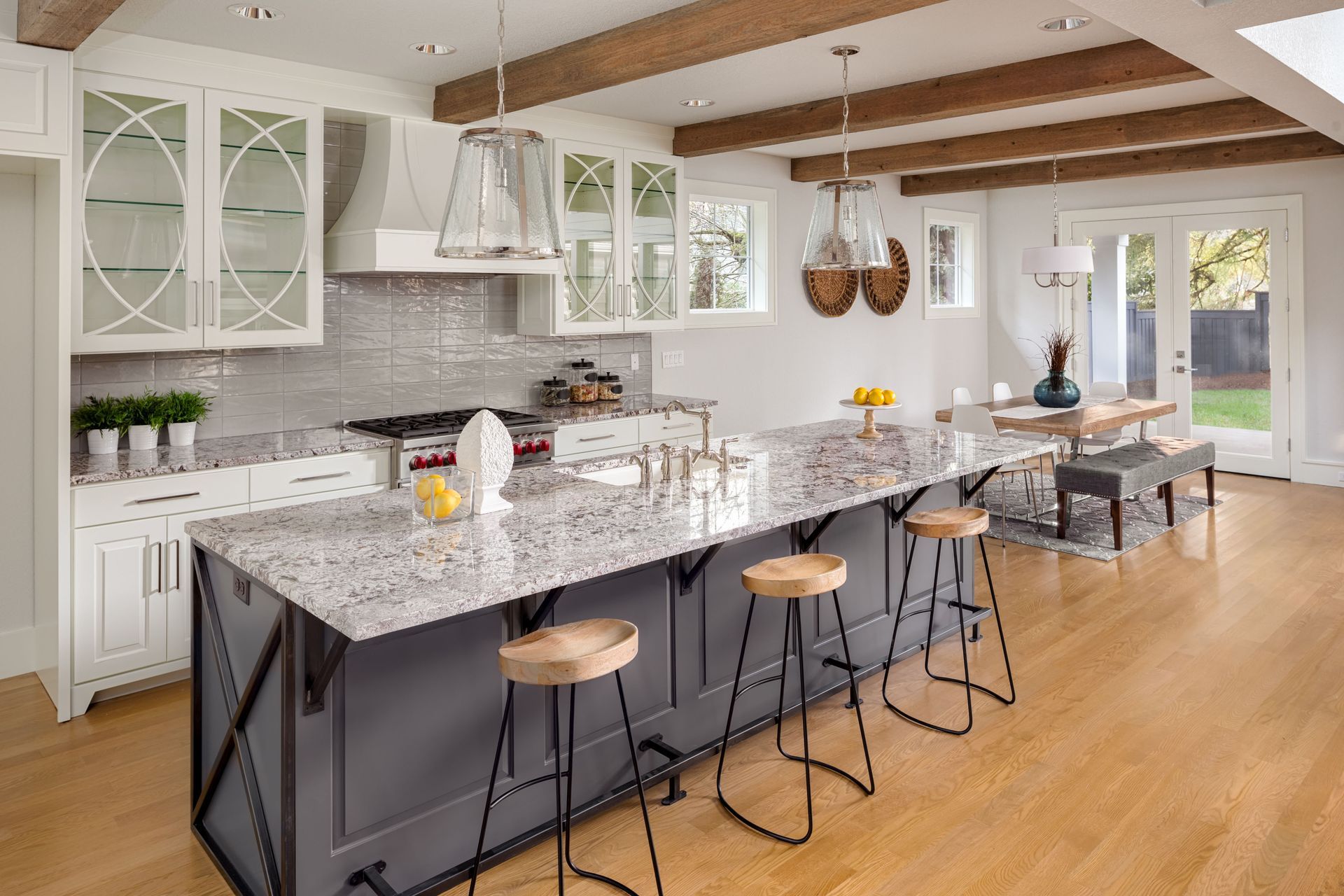
Another effective way to achieve balance is by introducing natural materials and soft finishes, such as wooden accents, woven textiles, or stone elements, which can warm up the stark contrast between black and white. Even small touches like bar stools, cutting boards, or decorative bowls can help create visual interest and prevent the space from feeling too rigid. By thoughtfully layering these elements, your black and white kitchen can feel dynamic, inviting, and perfectly tailored to your personal style.
Cabinetry, Countertops, and Flooring
Cabinetry selection is critical in a black and white kitchen. White cabinets can make a space feel airy and clean, while black cabinets add drama and sophistication. Some homeowners choose a combination, such as white upper cabinets paired with black lower cabinets or an island. Local kitchen designers can help determine the layout that maximizes storage, workflow, and aesthetic appeal.
Countertops are another essential element, both for function and design impact. According to Statista, 91% of homeowners upgraded their countertops during kitchen renovations in 2023 and 2024. Materials like quartz, granite, and marble are popular choices because they are durable, easy to maintain, and visually striking. Choosing a countertop that complements your cabinetry can reinforce the black and white theme or introduce subtle patterns and textures to add depth.
Flooring is equally important in tying the design together. White or light gray floors can brighten the space, while darker tiles or hardwoods ground the room and add warmth. Patterned flooring, such as black and white checkerboard tiles, can create a bold statement without overwhelming the design. Working with local kitchen designers ensures that all these elements coordinate harmoniously, creating a kitchen that is both functional and visually stunning.
Lighting and Fixtures
Lighting plays a crucial role in black and white kitchens, as it can dramatically affect how colors and finishes appear. Natural light is ideal, as it makes white surfaces glow and softens black elements. Large windows or skylights can make even smaller kitchens feel open and inviting. For areas without natural light, layered artificial lighting is essential.
Pendant lights, chandeliers, and under-cabinet lighting not only illuminate workspaces but also serve as decorative accents. Brass or gold hardware can add warmth and sophistication, while matte black or chrome fixtures complement the monochromatic palette. Faucets, cabinet pulls, and even lighting fixtures should be selected carefully to enhance the overall aesthetic. Local kitchen designers can provide guidance on the optimal lighting layout, fixture selection, and placement, ensuring that your kitchen is functional and stylish day and night.
In addition to aesthetics, proper lighting in a black and white kitchen enhances safety and usability. Well-placed task lighting ensures that countertops, the stove, and prep areas are brightly illuminated, reducing the risk of accidents while cooking. Layering ambient, task, and accent lighting allows you to adjust the mood and functionality of the space, creating a kitchen that is not only beautiful but also practical for everyday use.
Adding Texture and Accents
One of the biggest challenges in a black and white kitchen is preventing the space from feeling flat or monotonous. Texture and accents are key to adding visual interest without breaking the color scheme. Consider using glossy or matte finishes, textured tiles, open shelving, or decorative backsplashes to create layers of depth. Wooden elements, such as cutting boards, shelves, or stools, introduce warmth and contrast naturally against the black and white backdrop.
Accessories like plants, vases, and artwork can further personalize the space while keeping within the color scheme. Even subtle pops of color through dishware or textiles can prevent the kitchen from feeling too rigid. Local kitchen designers often emphasize the importance of layering textures and finishes to create a kitchen that feels dynamic, welcoming, and uniquely yours.
Functional Layouts and Workflow
A sleek black and white kitchen is most effective when the layout supports practical use. The classic work triangle, connecting the sink, stove, and refrigerator, is still a valuable design principle, ensuring that movement through the kitchen is efficient. Islands or peninsulas can add counter space, storage, and seating, making the kitchen both functional and social.
Local kitchen designers can help plan the layout to optimize both workflow and aesthetics. Proper storage solutions, like pull-out pantry shelves, deep drawers, and hidden organizers, maintain a clean, uncluttered appearance that enhances the sleek black and white look. By carefully considering both form and function, your kitchen can be a space where beauty and practicality coexist seamlessly.
Designing a black and white kitchen is about more than choosing two colors, it's about balance, texture, lighting, and layout. From cabinetry and countertops to flooring and fixtures, every choice contributes to creating a space that is both visually striking and highly functional. By working with local kitchen designers, homeowners can ensure that their kitchen is tailored to their lifestyle while maintaining timeless style and elegance.
With the right approach, a black and white kitchen can feel modern, inviting, and uniquely yours. Thoughtful materials, layered textures, and strategic accents all combine to create a cohesive and sophisticated space. Whether you are planning a complete renovation or a smaller refresh, a sleek black and white kitchen is a versatile design choice that stands the test of time, combining beauty, function, and enduring appeal.
Transform your kitchen into a stylish and functional black and white masterpiece. Contact Washtenaw Woodwrights Inc today to schedule a consultation with our expert team of local kitchen designers and bring your dream space to life.



Share On: